Collaboration: The Sweet Spot to Ensure Nutrition for Future Generations
An interview by Change Inc. (NL) with Lawrence Haddad CMG from Global Alliance for Improved Nutrition (GAIN), was the trigger to make collaboration an explicit point of attention for our initiative.
It is Time to Work Together
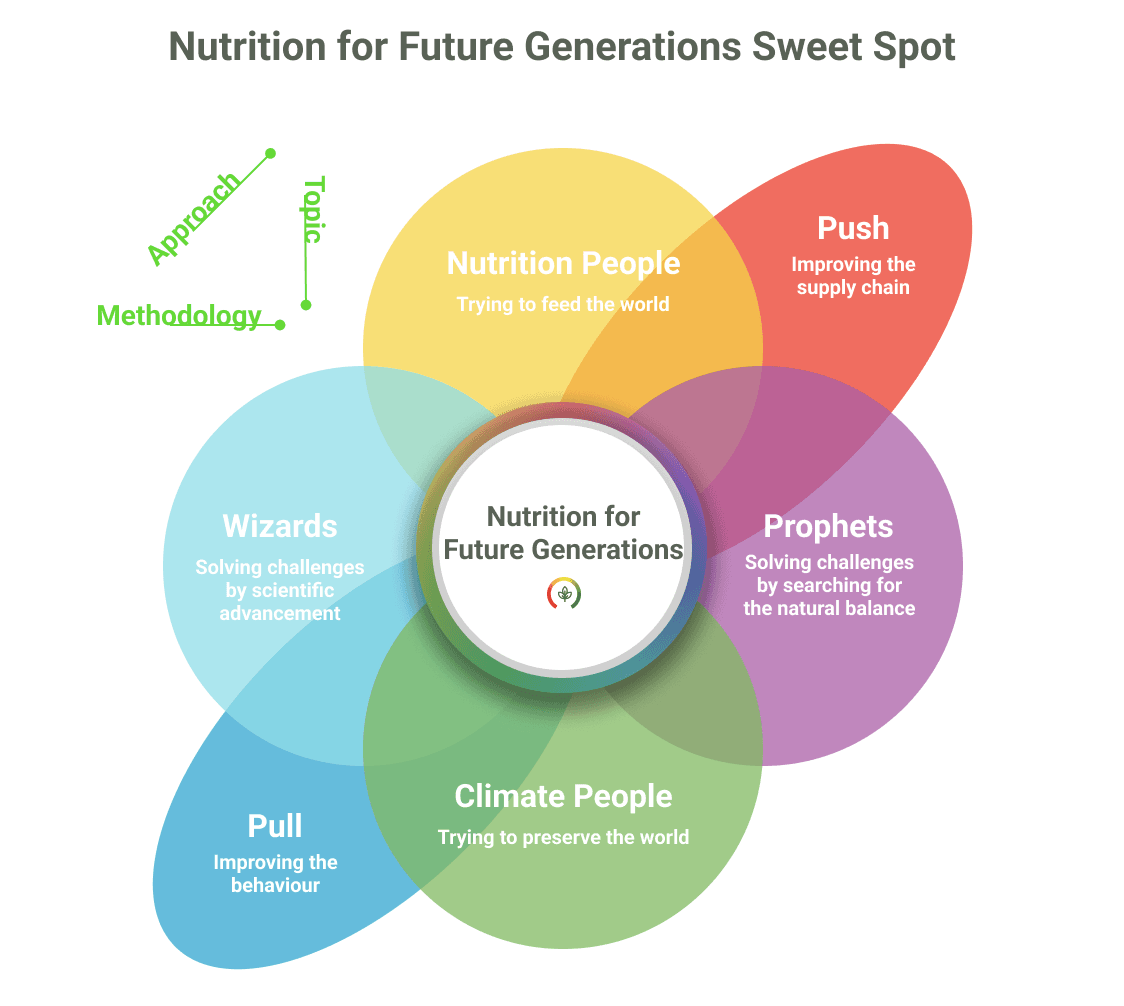
Haddad advocates for nutrition people and climate people to work together. This is no different then the need for the Wizards and the Prophets to work together as advocated by Charles C. Mann and more recently by Joris Lohman. (See this list for the books).
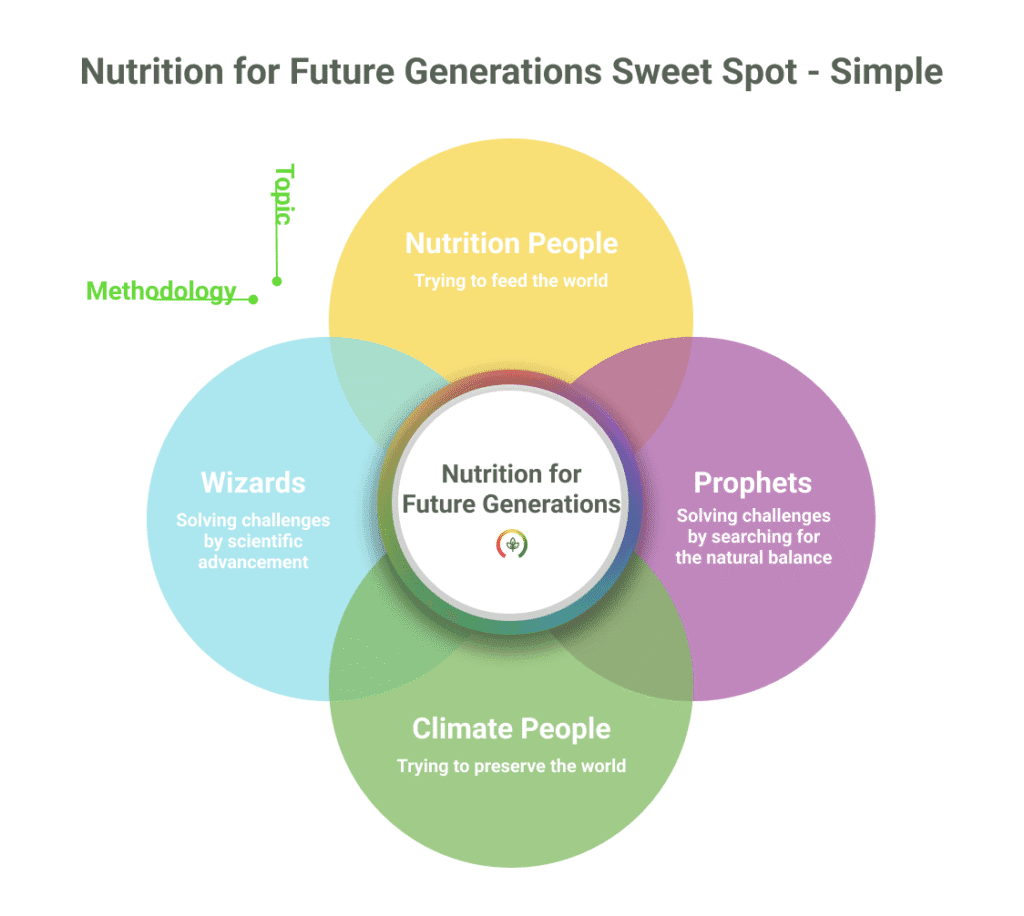
There is no nutrition without a sustainable system and that system needs to be transformed from all angles:
- Get nutrition where it is lacking (Nutrition people)
- Grow enough food for all (Wizards)
- Without depleting the eco system (Climate people)
- But find the perfect balance in nature (Prophets)
All these people have the same end-goal: feed the generations to come. And we are starting to realise we get more done, working together then focussing on our differences.
Right in the centre, where they all overlap is the sweet spot where we will be able to find the solution to feed our future generations:
But there is something that I am missing…
Lots of visionaries take on the responsibility to launch innovations, close the circular gap, (re-)introduce regenerative practises and advocate to incorporate these visions in our legislation and policies in both governmental and corporate organisations. This is good, and a lot of governmental, Angel and Venture capital is being allocated for this. But they will only be effective when they get the space they need…when they are enabled.
The major initiatives focus on the supply chain. That is where most visionaries and money is active. That is the push. But – basic rule of physics – for a successful push, a pull will help a lot.
As long as the consumer does not make the right choice, nothing happens. They need to make the right choice both with their purchases (in the supermarket) and with any other vote they make. They have to choose for the required policy and legislation to give the right visionaries the room they need. They need to choose the right products to give new initiatives a chance and grow to economy of scale. We need them to choose for Nutrition for our future generations.
So, besides the axis topic and methodology, we need a 3rd axis to the diagram: The Approach; Push and pull:
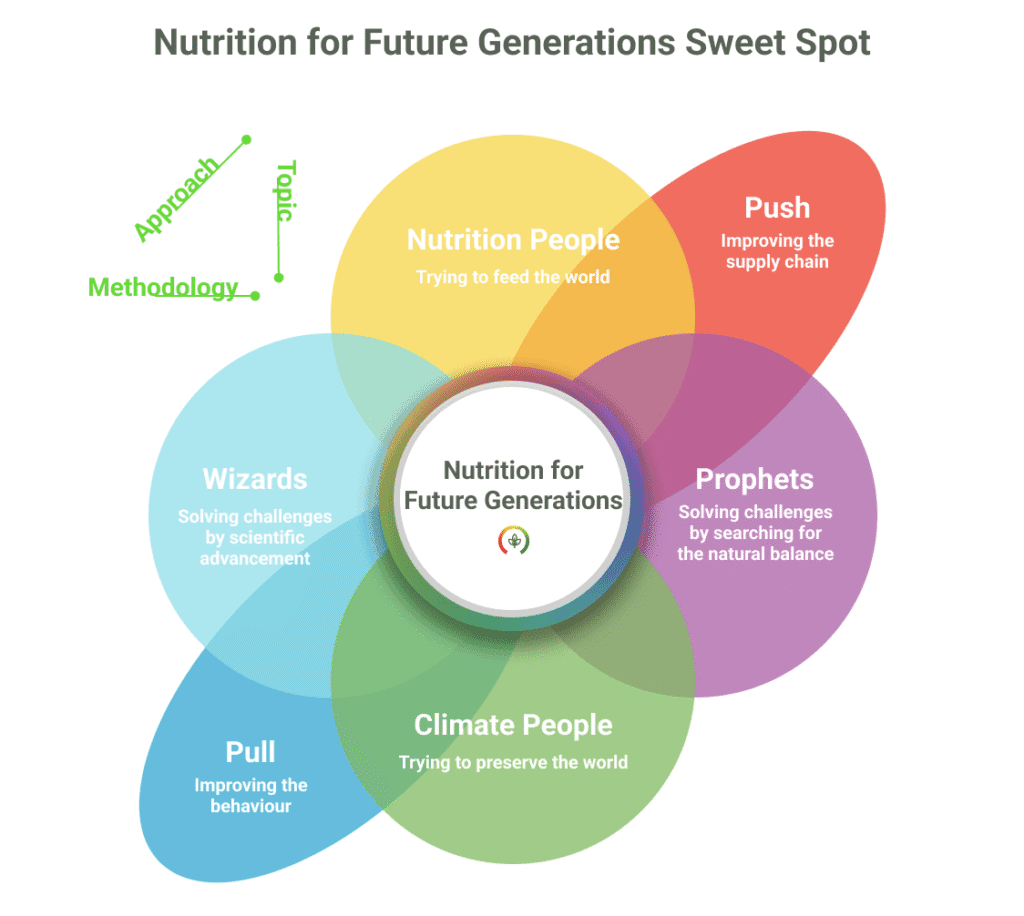
There are not a lot of commercial resources allocated to the pull – enabling the masses. Yes there are some (non profit) initiatives but they target niches and communities. And, I know, the food system is complex. It is a black box. So many variables. Activism is scary. And that is why we will never be able to move the majority of the people in their everyday life.
Right? Wrong!
Which Consumers Should be Reached?
2/3rd of consumers are willing to change. Imagine what that amount of people can achieve. Just how much climate impact could be reduced – even with current means. That is huge and they just need to be enabled.
Which consumers to target is also very clear, thanks to the EAT-Lancet Commission report:
The wealthiest 30% of people drive more than 70% of food-related environmental impacts.
This has very promising implications. These consumers:
- Are the easiest to reach
- Have the means to change
- Are willing to change
- Could easily reduce their impact by over 50% by a minor eating habit change
This provides clear guidance for any initiative to reduce climate impact by our food system.
Let’s enable the consumer
To get consumers moving, it all comes down to simplification and transparency. Make the current everyday life easier while enabling sustainable choices. Enable sustainable choices without having to go extreme or sacrifice.
And that is not that difficult to achieve. Adhere to these rules and you are good to go:
- Use current available data (learn from a.o. the True Price Movement),
- Combine it with great UX (learn from Fitbit and Duolingo),
- And apply the best product placement for favorite sustainable options as it is by far the most effective tool to improve behaviour. In online offerings, as well as in brick-and-mortar shops.
This is where Leftover Lucy will put its focus. This should help guide and position any initiative a bit better. And use it to find effective collaboration on ‘the other side’ of your spectrum. Together we can make sure there is nutrition for future generations.
Let’s Join Forces
Impact reduction by our food system has our focus. Our drive is to do this as fast and efficient as possible. The domein we currently focus on: Consumer behavioural change. Our strengths: Concept and product management, UX, automation.
Let’s join forces and become unstoppable.
Be a Part of This and Sign Up:


Let’s Explore a Partnership
We would love to exchange ideas, give our pitch, demo, climate and financial projection, your contribution and get things going.
Want to be the first?
We have a couple spots left!
Eat delicious food, save time, improve health and preserve nature? In an exclusive first user group? For free? Leave your email address to enter the launch user group waiting list: